 Thornton Brothers
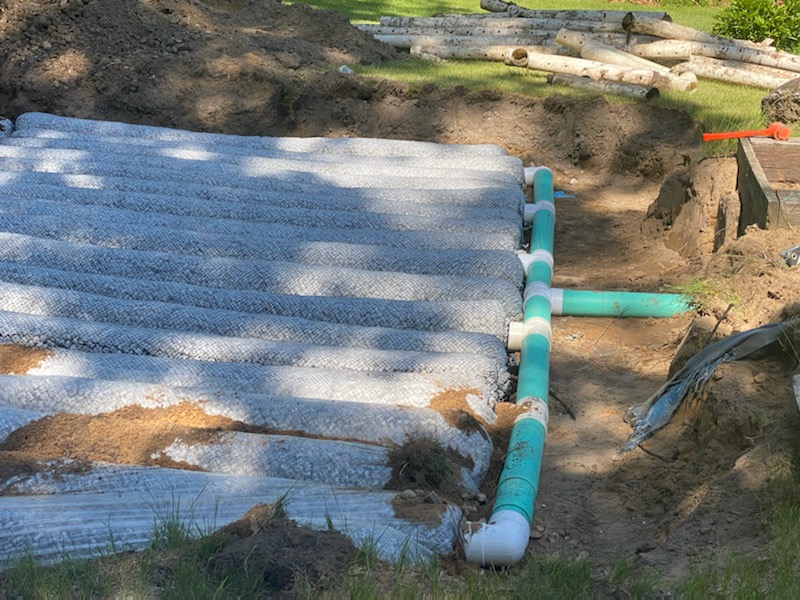
What is a septic drain field and how does it work?
Your drain field (also called a leach field or absorption field) is the underground network of perforated pipes and gravel trenches that filters wastewater from your septic tank into the soil. After solids settle in the tank, the liquid effluent flows out to the field, where soil microbes treat it naturally before it returns to groundwater.
The drain field is the final and most sensitive stage of a septic system. Clean liquid leaves the tank, spreads through the trenches, and slowly percolates down through the soil, which acts as a natural filter.
Because this stage depends on open soil and healthy bacteria, it's also the most expensive part to replace. Protecting it through regular pumping and smart habits is the single best thing you can do for your septic system.
- Collects treated effluent from the septic tank
- Distributes it evenly across gravel-filled trenches
- Lets soil and microbes filter the wastewater naturally
- Returns clean water safely to the surrounding ground
What are the warning signs of a failing drain field?
The most common signs of drain field trouble are slow drains throughout the house, sewage odors in the yard, soggy or pooling water over the field, unusually lush green grass above the trenches, and gurgling pipes. If you notice any of these, call us at (989) 684-1400 before the problem spreads.
A struggling drain field usually shows symptoms gradually, then all at once. Catching the early signs can mean the difference between a simple fix and a full replacement.
Several of these symptoms can also point to a tank that's overdue for pumping, so an inspection is the fastest way to know the real cause.
- Slow drains or backups in sinks, tubs and toilets
- Sewage or sulfur odors near the tank or field
- Standing water or spongy ground over the drain field
- Bright, fast-growing grass over the trenches
- Gurgling sounds in pipes and drains
What does drain field service include?
Our drain field service starts with a thorough inspection to find the root cause, then may include pumping the tank, clearing clogged distribution lines, jetting or rejuvenating trenches, repairing damaged piping, and advising on replacement when a field has truly failed. We give you clear options and upfront pricing before any work begins.
No two drain field problems are identical. Sometimes a simple overdue pump-out and a line cleaning restore flow; other times soil compaction or age means the field needs rebuilding.
We diagnose first and explain exactly what we find. You'll never get a surprise invoice or pressure to replace something that can be repaired.
- Full inspection and diagnosis
- Septic tank pumping and cleaning
- Clearing and jetting of distribution lines
- Repair of broken or crushed piping
- Honest guidance on repair vs. replacement
How can you extend the life of your drain field?
The best way to protect your drain field is to pump your septic tank every 3-5 years, conserve water, keep solids and grease out of the system, and never drive or build over the field. Keeping these habits prevents the solids and overload that cause most premature drain field failures.
A drain field fails fastest when too many solids escape the tank or when the soil gets compacted and starved of air. Routine pumping keeps solids where they belong, and protecting the surface keeps the soil healthy.
Water conservation matters too. Spreading out laundry loads and fixing leaks keeps the field from being flooded faster than the soil can absorb.
| Do | Don't |
|---|---|
| Pump your tank every 3-5 years | Wait until you see backups to act |
| Spread out laundry and water use | Flush wipes, grease or chemicals |
| Keep roots and heavy trees away | Plant shrubs or trees over the field |
| Divert gutters and runoff away | Let rainwater pool over trenches |
| Keep the area as open lawn | Drive, park or build over the field |
Can a failing drain field be repaired instead of replaced?
Often, yes. If the field is clogged from an overdue tank or a blocked distribution line, cleaning, jetting and proper pumping can restore flow. If the soil has reached the end of its life or the trenches are saturated and compacted, replacement is the lasting fix. We always diagnose before recommending a full rebuild.
Many homeowners assume a soggy yard means a costly new field, when the real culprit is a tank that hasn't been pumped in years. We check that first.
When replacement truly is needed, we handle the excavation and installation with environmentally responsible disposal, and we walk you through every option and the upfront cost beforehand.
Why choose Thornton Brothers Septic for drain field service?
We're a family-owned, fully licensed and insured septic company with deep roots in the Thumb and Great Lakes Bay Region. Based in Caro, we serve Vassar, Saginaw, Bay City, Midland, Freeland, Bridgeport and surrounding communities with 24/7 emergency service, environmentally responsible disposal, and honest, upfront pricing with no hidden fees.
Drain field issues can't wait, and your neighbors here in Tuscola County and across Mid-Michigan trust us to show up, tell the truth about what's wrong, and fix it right.
From diagnosis to repair to full replacement, you get personal service from a local family business that treats your property like our own. Call (989) 684-1400 any time.
- Family-owned with rural-Thumb roots
- Fully licensed and insured in Michigan
- 24/7 emergency septic service
- Environmentally responsible disposal
- Clear, upfront pricing with no hidden fees
Frequently Asked Questions
How long does a septic drain field last?
What causes a drain field to fail early?
Can I drive or park on my drain field?
Why is the grass greener over my drain field?
Does pumping my septic tank protect the drain field?
How do I know if it's my tank or my drain field?
Do you offer emergency drain field service?
What areas do you serve for drain field service?
Trusted Septic Resources
Homeowner guidance from authoritative sources on septic system care, maintenance, and Michigan regulations: